Introduction
I am a computer scientist and public historian whose work focuses on creating systems and preserving histories that serve real communities. I combine technical skills, careful research, and organizational insight to make complex tasks understandable and actionable for those who rely on them.
In software projects, I design and maintain tools that help organizations see what is happening, solve problems efficiently, and make informed decisions. In historical preservation, I apply the same approach: documenting sites, analyzing conditions, and making history visible and meaningful to the public.
Across all of my work, I am guided by a single principle: every task, whether technical or historical, exists to serve people and communities. This perspective shapes the decisions I make and the stories I choose to tell.
Non-Profit & Community Work
My engagement with historical preservation began in high school with my Eagle Scout leadership project, creating a historical marker for a pauper cemetery. The skills and insights gained—from organizing memorials to coordinating with government officials—laid the foundation for my current role as board member and treasurer of the Descendant Community of Milwaukee County Grounds Cemeteries, Inc.. Here, I continue to apply both governance and technical skills, including GIS mapping, to document cemetery conditions and support preservation efforts.
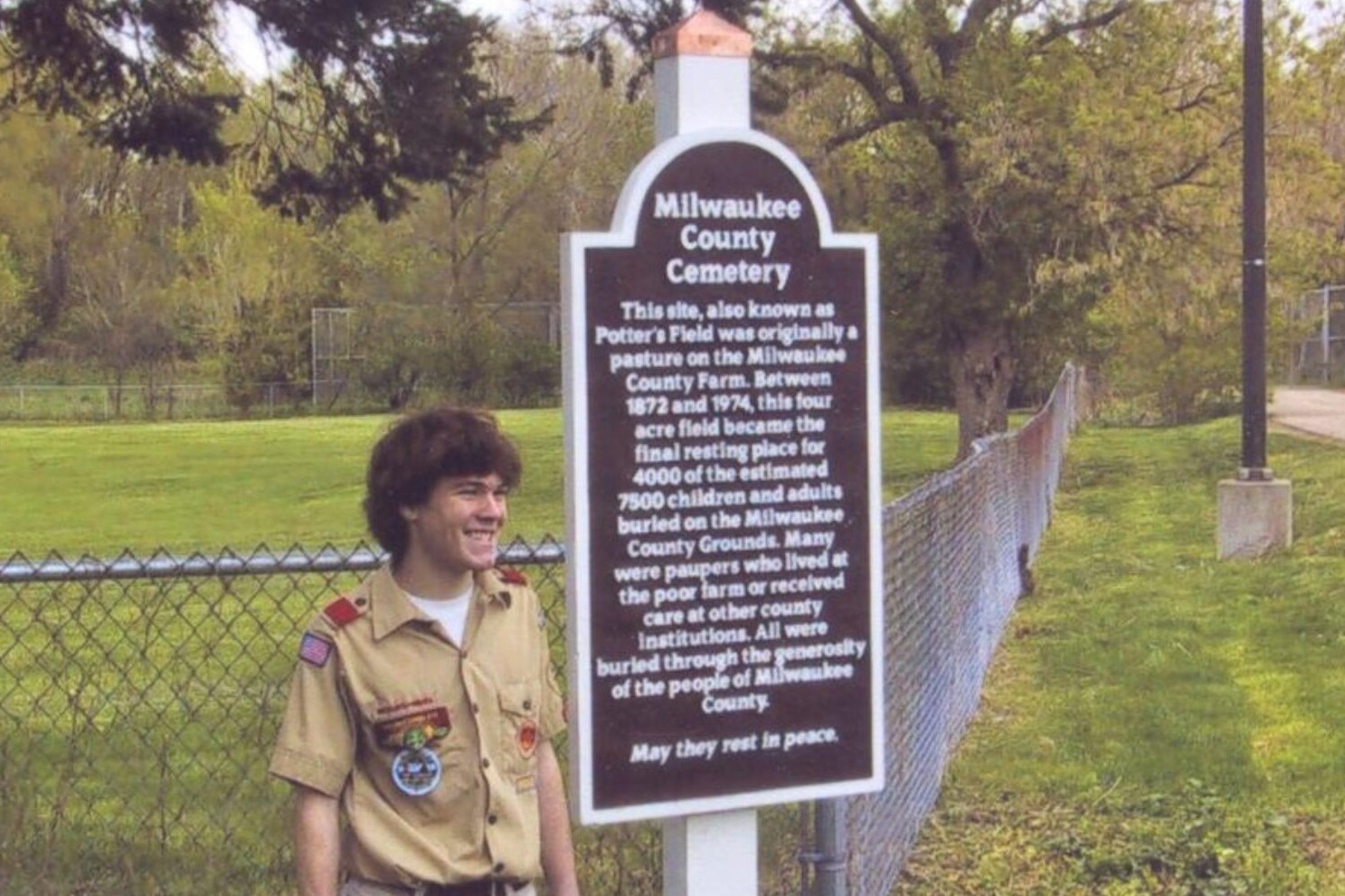
Today, I serve as a board member and treasurer of the Descendant Community of Milwaukee County Grounds Cemeteries, Inc., a 501(c)(3) non-profit dedicated to ensuring dignified final resting places for those overlooked due to indigence, disability, or unknown identity. My contributions include drafting the articles of association, securing state and federal recognition, creating and maintaining the public website, and guiding board decision-making.
My ongoing efforts include co-planning memorial ceremonies, documenting cemetery conditions, coordinating genealogical research, and creating digital memorials. This work ensures that the histories and dignity of all individuals buried at the County Grounds are preserved while engaging the wider community in their shared history.
2025 Flood Case Study
In August 2025, severe flash flooding impacted southeastern Wisconsin, including Cemetery 3 on the County Grounds. The event exposed long-hidden gravestones, disturbed the ground, and highlighted the cemetery’s vulnerability to extreme weather. In response, we met with the Milwaukee Metropolitan Sewerage District. After our meeting, I created maps to help explain the flooding and the related flood-management system, telling a more powerful and informative story than could be told with only text and photographs.
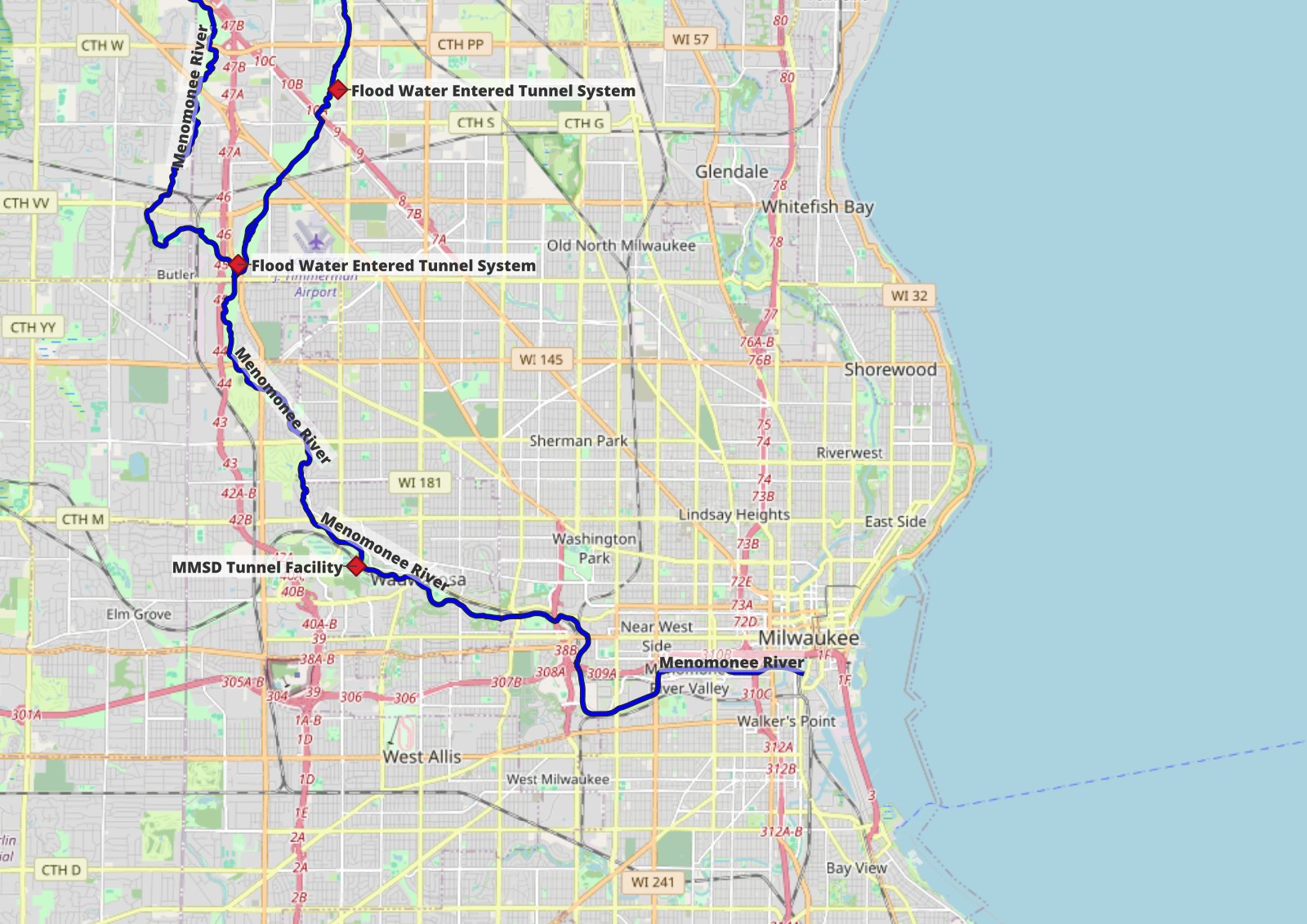

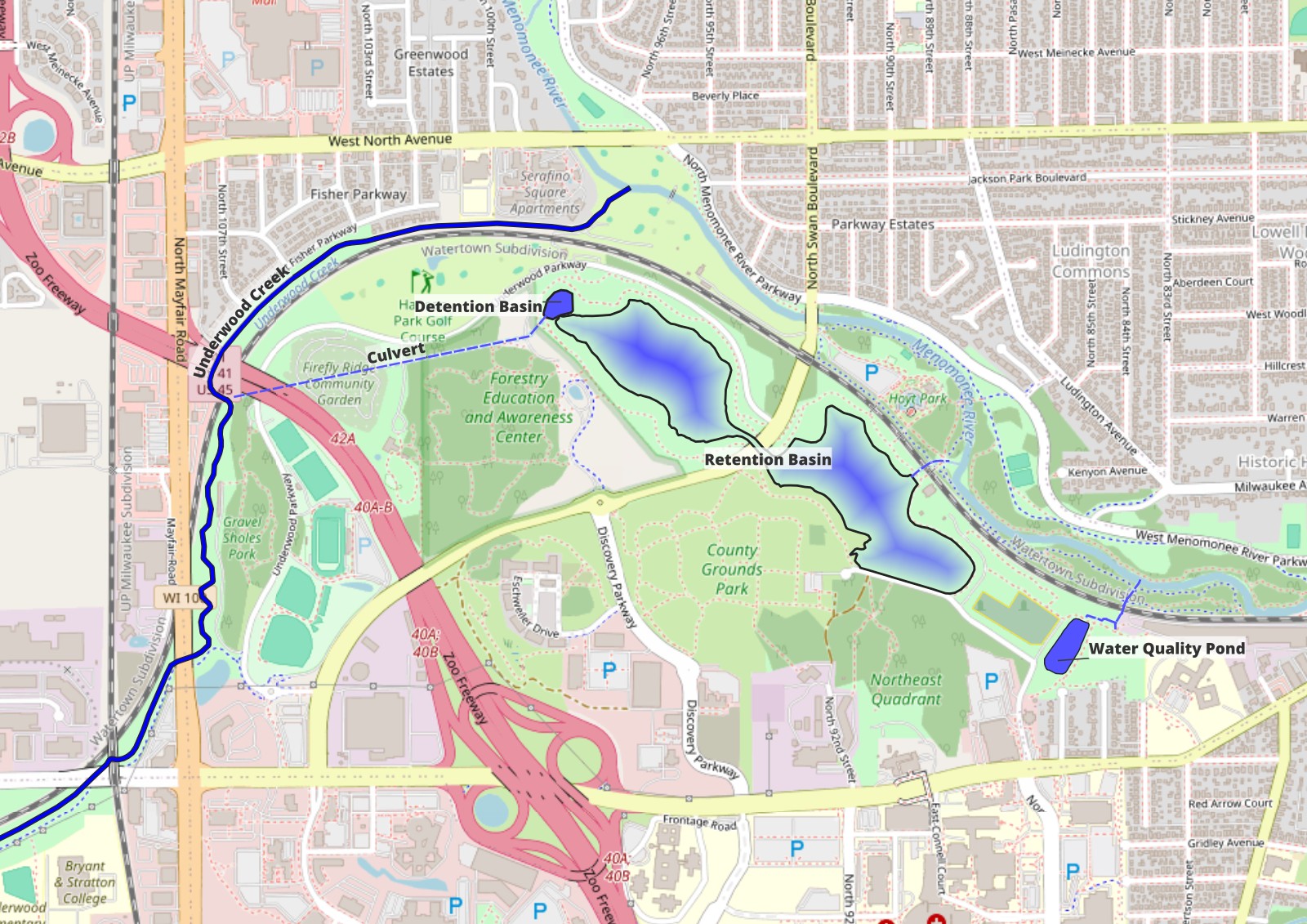
These maps serve as a case study not only of the flood’s effects but also of how storytelling through visual data can convey complex historical and environmental narratives. By layering geography, infrastructure, and site history, the Descendant Community makes preservation challenges and their solutions tangible to volunteers, stakeholders, and the wider public.
Software Development Experience
My software practice spans the full development life cycle, from understanding the business problem to designing, building, and maintaining reliable systems. I focus on the underlying problem before selecting technical solutions, ensuring software supports real-world goals and constraints.
Across projects—from industrial control systems to compliance monitoring and cloud applications—I work to reduce debugging time, improve operational reliability, and provide stakeholders with clear, actionable visibility into system performance. I apply cloud and DevOps practices as tools to serve these goals.
I have contributed to a wide range of projects, including industrial control systems, compliance monitoring for national safety standards, insurance platforms, and cloud-based applications. In each, I adapt to the technology required and prioritize solutions that are robust, maintainable, and responsive to user needs.
Beyond coding, I design and implement automated and manual testing, develop continuous integration and deployment pipelines, and collaborate closely with teams to create clear, maintainable processes. I also mentor junior developers and document workflows to help teams work more efficiently.
Across projects, I have helped reduce debugging time from days to hours and improved operational reliability. I ensure business stakeholders have clear visibility into system performance and apply cloud and DevOps practices to optimize processes. I am experienced with cloud platforms (Azure, AWS, Google Cloud) and DevOps practices, applying analytics to optimize processes and guide decision-making.
Education
My academic journey blends technical training with a liberal-arts perspective. I earned a Master of Science in Computer Science from the University of Wisconsin–Milwaukee in 2023, completing research on modifying food recipes for readers with mild or temporary reading disabilities. Prior to that, I received a Bachelor of Science in Computer Science from St. Norbert College, complemented by minors in Philosophy and Religious Studies. These experiences strengthened my problem-solving, critical thinking, and ethical reasoning, skills I apply across both software and historical preservation work.
Professional Affiliations
I maintain professional affiliations that support both my technical and historical work:
- Association for Computing Machinery
- Society of American Archaeologists